
Scaffold Inspections & Safety
A scaffold is only safe if it stays safe. Weather, alterations, overloading and even well-meaning trades moving boards can all change a scaffold after it goes up. That’s why every LMT scaffold comes with a full inspection regime, from the day it’s handed over to the day it comes down.
Our inspections follow the Work at Height Regulations 2005 and TG20:21 guidance. You get a handover inspection before first use, an inspection at least every seven days, and a further inspection after any alteration or severe weather, with a written report each time.
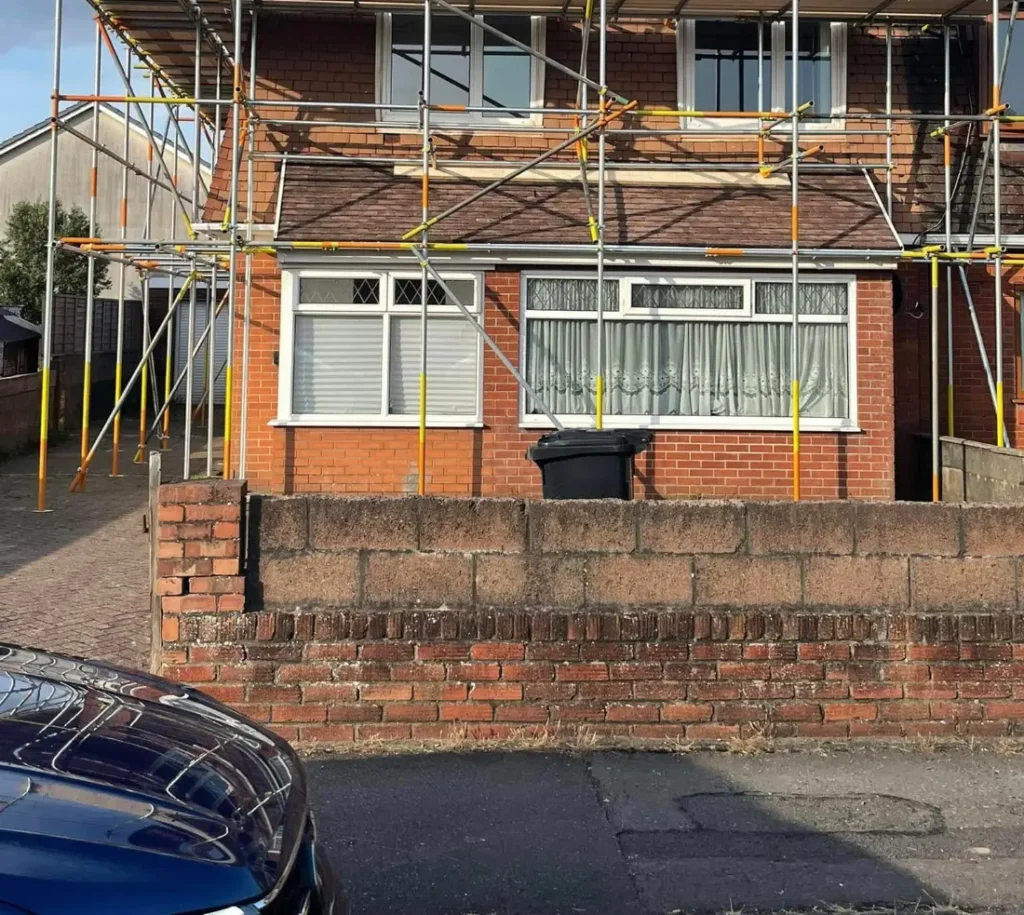
What We Check
Each inspection is a thorough, hands-on check of the whole scaffold, not a quick look from the ground. We check:
Base plates, sole boards and ground conditions; standards, ledgers, transoms and bracing; and the ties into the building, to make sure the scaffold is stable and hasn’t moved.
Boards are fully supported, secure and undamaged, with no gaps or trip hazards, and platforms aren’t overloaded with materials.
Guardrails, mid-rails, toe boards and brick guards are in place on every working lift, and ladders, gates and stair access are secure.
Sheeting, netting, temporary roofs and loading bays are checked for wind damage, overloading and secure fixings.
Inspection Services
Included as standard on every LMT scaffold across South Wales.
A full inspection before the scaffold is first used, with a handover certificate confirming it’s complete and safe to use.
Inspections at least every seven days while the scaffold is in use, as the Work at Height Regulations require.
Re-inspection after high winds, heavy rain or anything else that could affect the scaffold’s stability.
Every alteration is inspected and signed off before the scaffold is used again.
Tags at access points show at a glance whether the scaffold is safe to use or must not be used.
A written report for each inspection, so contractors and homeowners have a clear record for their files.
Your Responsibilities
Under the Work at Height Regulations 2005, a scaffold used for construction work must be inspected:
The person in control of the work, often the main contractor or your builder, is responsible for making sure these inspections happen. Reports must be kept on site until the work is finished and then for three months. When you hire scaffolding from LMT, we carry out these inspections for you as part of the hire, whether it’s domestic scaffolding on your home or commercial scaffolding on a building site.
Our Process
Safety built in from the first day to the last.
The scaffold is erected and fully inspected before anyone uses it.
We tag the scaffold at each access point and give you a handover certificate.
We inspect at least every seven days and after storms or alterations, with written reports.
Any issues are put right straight away and the scaffold is re-tagged before it’s used again.
Why Choose Us
Every scaffold we put up carries our name, so we don’t cut corners on inspections. You get scaffolds built to TG20:21 guidance, inspected by our own team and recorded properly, giving homeowners, builders and site managers complete peace of mind.
Fully Insured
Fully Insured
TG20:21 Compliant
TG20:21 Compliant
On Time, Every Time
On Time, Every Time
Free, Fixed Quotes
Free, Fixed Quotes
Areas We Cover
Every scaffold we erect from our base in Port Talbot comes with a full inspection regime, across Swansea, Neath Port Talbot, Bridgend, Cardiff and nearby areas, including:
Explore our other scaffolding services across Swansea and South Wales.
Testimonials
Homeowners, roofers and builders across Swansea, Neath Port Talbot, Bridgend and Cardiff rely on LMT Scaffolding for safe, on-time scaffold access.


FAQs
Common questions about scaffold inspections and safety.
Scaffolding used for construction work must be inspected before it is first used, at least every seven days while it remains in use, and after anything that could affect its safety, such as alterations, high winds or damage.
We do. Inspections on every LMT scaffold are carried out by our own team as part of your hire, so you don’t need to arrange a separate inspector.
A handover certificate confirms that the scaffold has been erected, inspected and is complete and safe to use for the agreed purpose. We provide one whenever a scaffold is handed over.
Scaffold tags are fitted at access points to show the scaffold’s status at a glance. If the tag shows the scaffold has been inspected and is safe, it can be used. If it shows the scaffold is incomplete or unsafe, nobody should use it until it has been put right and re-inspected.
Stop using it straight away and call us on +44 7465 675372. We’ll come out to inspect it, make it safe and re-tag it before work continues.
Yes. Under the Work at Height Regulations, inspection reports must be kept on site until the construction work is completed and then kept for three months. We provide written reports so you have them ready for your records.
Call or WhatsApp +44 7465 675372 or send us your project details for a free site visit and written quote anywhere in Swansea, Neath Port Talbot, Bridgend or Cardiff.
We use analytics cookies to see how visitors use our website. They are only set if you accept. Privacy Policy